What changes when an AI prototype needs to become a usable system
Li Zimu
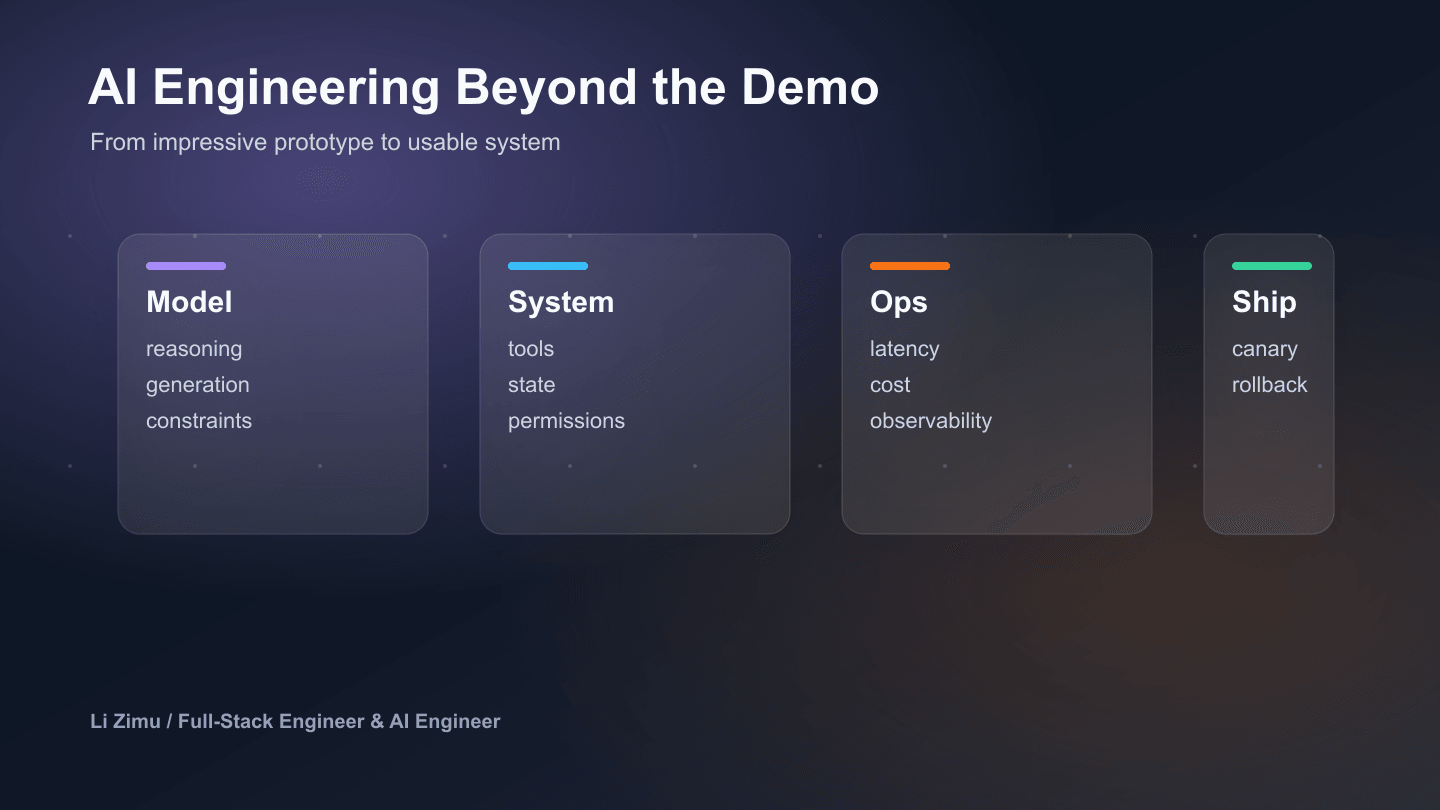
An AI demo can be simple: take a prompt, call a model, show a result.A usable AI system is different. It has to handle unclear inputs, long-running tasks, partial failures, cost limits, latency, security boundaries, and user expectations. The model is only one part of the system.The engineering work begins when the prototype needs to survive real usage.
Context is product design
AI systems depend on context. The question is not just how much context to include, but which context is reliable, relevant, and safe to use.Good context design usually means separating durable user intent from temporary task state. It also means deciding what the model should know, what the application should compute deterministically, and what should be left out.
Tools need contracts
Tool use is powerful because it lets the model act through software instead of only producing text. But every tool needs a clear contract: inputs, outputs, failure behavior, permissions, and auditability.Without that contract, tool calling becomes difficult to debug. A failed action might be a model issue, a schema issue, a permission issue, or a normal downstream failure.
Latency and cost shape the experience
AI products often feel different in local demos because no one is watching the clock or the bill. In production, latency and cost are product constraints.Some requests should stream. Some should run in the background. Some should be cached. Some should not use a model at all.The practical question is not "Can AI do this?" It is "Can the system do this reliably, at the right speed, with a cost profile that makes sense?"
Observability is not optional
When an AI feature behaves unexpectedly, you need enough evidence to understand why. That means logging the right metadata, tracking tool calls, measuring latency, identifying upstream errors, and preserving enough trace detail to debug without leaking sensitive data.The system should make failure legible. Otherwise every incident becomes guesswork.
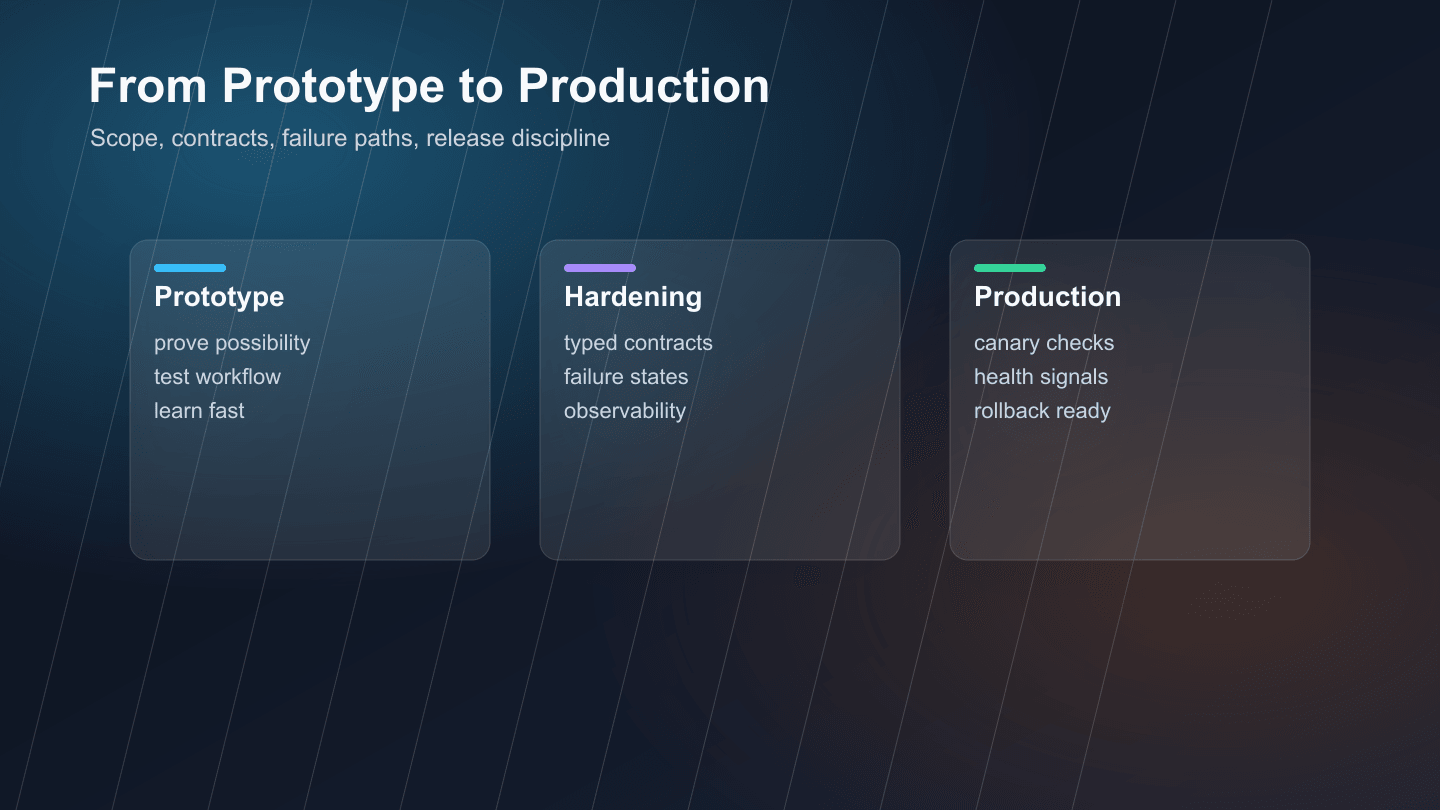
Deployment and rollback matter
AI features change quickly, but production systems still need boring release discipline. A useful deployment path includes health checks, canary verification, clear configuration, and rollback commands that work under pressure.The first demo proves possibility. The production version proves responsibility.That is the difference I care about in AI engineering: building systems that are not only impressive, but usable, observable, and maintainable.